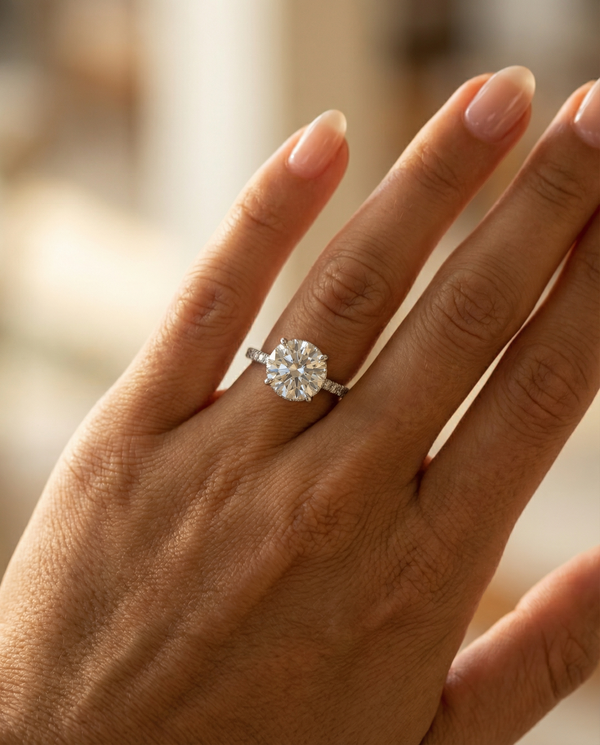
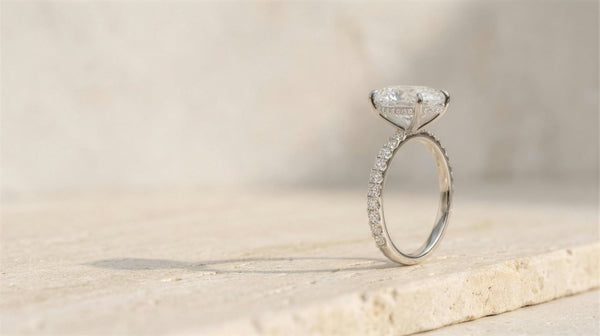
Education
Lab-Grown vs Natural Diamonds: What Actually Differs
Same crystal, same sparkle, very different price. A jeweler's straight answer on lab-grown vs natural diamonds — chemistry, cost, resale, and how to choose.

A lab-grown diamond and a natural diamond are the same material. Same carbon, same crystal structure, same hardness, same sparkle, graded on the same scales by the same laboratories. The differences are three: where it formed, what it costs, and what it is worth later. Everything else you have heard is marketing — from one side or the other.
What “lab-grown” actually means
A lab-grown diamond is carbon crystallized into diamond in a controlled chamber — either under high pressure and temperature (HPHT) or deposited atom by atom from carbon plasma (CVD). The process takes weeks instead of a billion years, but the output is diamond, full stop. It is not cubic zirconia, and it is not moissanite; those are different materials that imitate a diamond's look. A lab diamond does not imitate anything — it is one.
This is why lab-grown stones test as diamond on a thermal tester, wear like diamond on a hand, and carry the same IGI or GIA paperwork. Distinguishing one from a natural stone requires specialized lab equipment reading growth patterns — no jeweler can tell by eye, and neither will anyone at a dinner party.
The price gap, honestly
As of 2026, a lab-grown diamond typically costs a fraction of the equivalent natural stone — the same budget buys roughly two to four times the carat weight at the same cut, color, and clarity. The gap exists because natural supply is finite and controlled, while lab supply scales with production capacity. Production costs have fallen for years and prices have followed.
What that means in practice: the budget that buys a strong one-carat natural stone buys a two-plus-carat lab-grown stone with better color and clarity. We ran the full budget math in How Much Should an Engagement Ring Cost?
Resale: the honest trade-off
This is the one real argument for natural, so let's state it plainly. Natural diamonds hold some resale value — typically a meaningful fraction of retail, more for rare stones. Lab-grown resale value is minimal and unlikely to recover, because supply keeps growing and production keeps getting cheaper.
Two things temper this. First, an engagement ring is not an investment vehicle — almost nobody sells, and natural stones bought at retail also lose plenty on resale. Second, the money a lab stone saves is real and immediate; it can sit in an index fund, pay for the honeymoon, or buy a bigger stone. Decide which matters to you, but decide with real numbers, not with a salesperson's framing.
Rarity, sentiment, and the billion-year argument
Some people simply want the object that formed in the earth before life existed. That is a legitimate preference — it is romance, and engagement rings run on romance. If the origin story matters to you, buy natural and never look back. Just know that it is a story you are buying, not a visible property of the stone. On the hand, in the light, across the table — the two are identical.
Certification: read the same paper either way
Both lab-grown and natural stones come graded — cut, color, clarity, carat — by independent laboratories, with lab-grown stones clearly disclosed as such on the report and laser-inscribed on the girdle. Whatever you choose, buy the certificate, not the sales pitch: an excellent cut grade matters more than any other line on the page. Our Buyer's Guide covers how to weight the 4Cs the way your eye actually does.
Where colored stones change the math
One place lab-grown is not just cheaper but categorically different: fancy colored diamonds. A natural pink diamond of real saturation is auction-house territory — six figures and up. Lab growth makes the same color physics attainable: our Roselle ring carries a 3.08-carat lab-grown pink diamond that would be unbuyable as a natural stone for anyone without a hedge fund. For color, lab isn't the compromise — it's the unlock.
How we handle it
We build with both. Every ring is made to order, so the stone is sourced for your build — lab-grown when you want maximum stone for the budget, natural when the origin matters to you. Configure a setting in the Lina ring builder and the price updates live either way. If you're undecided, say so in the notes — we'll quote the same design both ways and let the numbers argue.
The short version: buy lab-grown for value and size, buy natural for origin and resale, and buy neither because someone told you the other one isn't real. They're both diamonds. One of them just took the scenic route.
Common questions
Are lab-grown diamonds real diamonds?
Yes. A lab-grown diamond is crystallized carbon with the same chemical composition, hardness, and optical behavior as a mined diamond, and it is graded on the same scales by the same laboratories. It is not a simulant like cubic zirconia or moissanite — those are different materials. A lab-grown diamond tests as diamond because it is diamond.
Can a jeweler tell a lab-grown diamond from a natural one?
Not by eye, and not with a loupe. Standard thermal testers read lab-grown stones as diamond because they are diamond. Telling the two apart requires specialized laboratory equipment that reads growth patterns and trace elements. Grading reports disclose origin, and lab-grown stones are laser-inscribed on the girdle.
Why are lab-grown diamonds so much cheaper?
Supply. Natural diamond supply is finite and tightly controlled; lab-grown supply scales with production capacity, and production costs have fallen steadily. As of 2026 a lab-grown stone typically costs a fraction of the equivalent natural one — the same budget buys roughly two to four times the carat weight.
Do lab-grown diamonds hold their value?
No — plan on minimal resale value. Growing supply and falling production costs keep pushing lab prices down. Natural diamonds retain more value, though stones bought at retail also resell well below purchase price. If resale genuinely matters to you, buy natural; if wear-it-forever value matters, the lab stone's upfront savings are real money.
Do lab-grown diamonds get cloudy or fade over time?
No. A lab-grown diamond is as hard and as chemically stable as a natural one — it does not cloud, fade, or wear differently. Any diamond can look dull when it is dirty; that is soap film and skin oil, and it cleans off both kinds of stone identically.
Should I choose lab-grown or natural for an engagement ring?
Choose lab-grown if you want the most size and quality for the budget — the visual result is identical and the savings are large. Choose natural if the billion-year origin story or resale value genuinely matters to you. Both are diamonds; neither choice is wrong. Decide on real numbers, not on either industry's marketing.